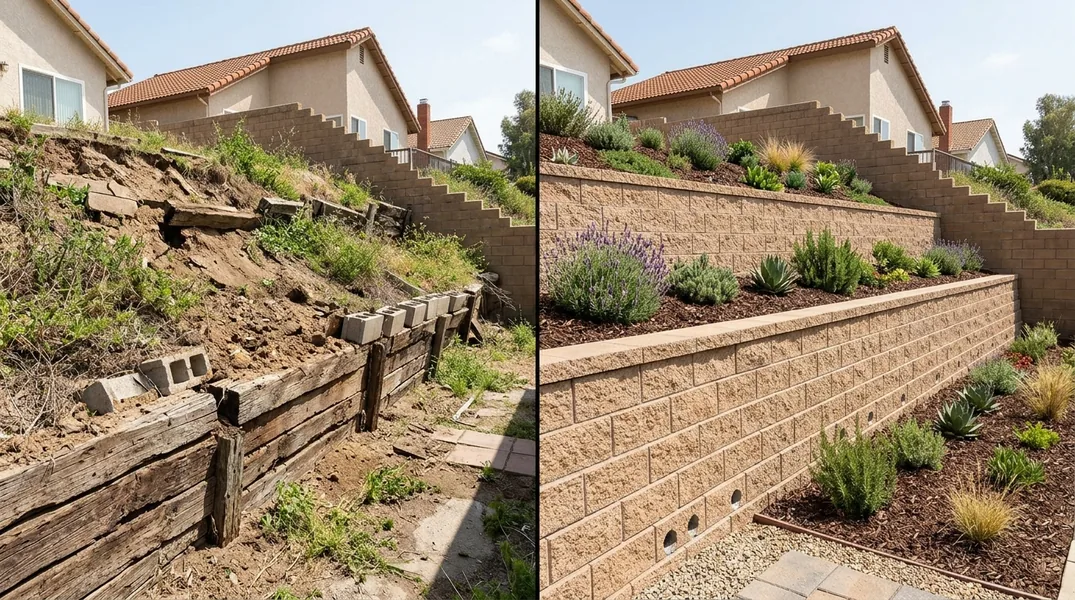
Why Leaning Retaining Walls Are Common in Anaheim
A leaning retaining wall is one of those problems that rarely fixes itself. In Anaheim, homeowners deal with a mix of clay-heavy soils, seasonal downpours, and older walls that were built before modern drainage standards were widely followed. When water can't escape, it builds up behind the wall and pushes outward, which is the single most common cause of a wall that starts to tip.
Age matters too. Many properties in and around Anaheim have walls that are 20, 30, or even 40 years old. Over time, soil settlement, root growth, and repeated wet-dry cycles weaken the base. A wall that leans even a few inches is a warning sign, not a cosmetic issue. Ignoring it usually leads to bigger movement, cracked panels, and eventually a collapse that can damage landscaping, fences, and even nearby structures.
Signs You Need Leaning Retaining Wall Repair
Not every lean means the wall is doomed. Some walls settle slightly and then stabilize. The key is knowing which symptoms point to a fixable problem and which point to a failing structure. Cracks that run diagonally or widen over time are a red flag. So are bulging sections, soil washing out at the base, and gaps between wall blocks or panels. If a wall has moved more than about two inches out of plumb, it deserves a professional look.
Leaning retaining wall repair is often the right call when the movement is recent, the wall is otherwise sound, and the underlying cause is drainage or a localized soil issue. A contractor can relieve the pressure, improve drainage, and anchor or rebuild the affected section. The earlier you act, the more likely a targeted repair will hold. Waiting until the wall is visibly separating from the soil behind it usually pushes the project into replacement territory.
If you're seeing any of these signs, it's worth getting a free estimate before the next rainy season arrives.
When Retaining Wall Crack Repair Is Enough
Hairline cracks in concrete are common and often harmless, especially in older walls. But cracks that are wider than a quarter inch, that follow a stair-step pattern, or that let water through are a different story. Retaining wall crack repair can involve injecting cracks with structural epoxy, patching spalled concrete, and correcting the drainage that caused the problem in the first place. When the wall is still plumb and the cracks are surface-level, this approach can extend the life of the wall for years.
The catch is that crack repair only works if the wall itself is stable. If the wall is leaning, patching cracks is like putting a bandage on a broken bone. A qualified contractor will check the wall's alignment, the condition of the footing, and how water is moving through the soil before recommending crack repair. In many cases, the honest answer is that repair is a short-term fix and replacement is the better investment. That's why an on-site evaluation matters more than a phone diagnosis.
Retaining Wall Replacement: When It's the Smarter Choice
Sometimes the most cost-effective decision is to start over. If a wall is severely leaning, has multiple failing sections, or was built without proper drainage and reinforcement, Retaining Wall Replacement is usually the right move. A new wall can be engineered for the actual soil conditions on your property, with proper footings, drainage gravel, and weep holes that prevent the water pressure that destroyed the old wall.
Replacement also gives you options. Many Anaheim homeowners choose Concrete Retaining Walls for their durability and low maintenance, while others prefer block or stone to match the landscaping. A replacement project is also the moment to fix grading issues that send water toward the wall. Done correctly, a new wall should last decades and add real value to the property. For homeowners in nearby Fullerton and Orange, the same principles apply.
Repair or Replace? How to Decide
The decision usually comes down to three factors: how far the wall has moved, how old it is, and what caused the failure. A wall that is 10 years old, leaning slightly, and has a clear drainage problem is often a good candidate for Retaining Wall Repair. A wall that is 35 years old, bulging in multiple places, and showing cracked panels is usually a replacement. The middle ground, where the wall is sound but has localized issues, is where a professional assessment saves you the most money.
It also helps to think about what you want from the wall. If you plan to stay in the home for years, investing in a properly engineered replacement often pays off. If you're preparing to sell, a repair that stabilizes the wall and documents the fix may be enough. Either way, get more than one opinion and ask specifically about drainage, because that is the root cause in most Anaheim failures. Homeowners in Placentia and across the region face the same clay soil and storm patterns, so the advice holds.
Retaining Wall Repair Near Me: Finding the Right Pro in Anaheim
Searching for retaining wall repair near me in Anaheim will turn up plenty of options, but not all of them are equipped to diagnose a structural problem. Look for a contractor who inspects the wall in person, asks about drainage and soil, and explains the difference between a cosmetic fix and a structural one. Ask whether they pull permits when required and whether they offer any kind of workmanship warranty. A company that only patches cracks without addressing water pressure is setting you up for a repeat failure.
Anaheim Retaining Wall serves homeowners throughout Anaheim and the surrounding communities. Whether you need a leaning wall evaluated, a cracked wall repaired, or a full replacement planned, the first step is a straightforward conversation about what you're seeing. Call (714) 860-7329 to schedule an assessment, or reach out online for a free estimate. Getting ahead of a leaning wall now is almost always cheaper than dealing with a collapse later.
Looking for a professional retaining wall contractor in Anaheim? Anaheim Retaining Wall responds fast for all your retaining wall needs.
Get a Free QuoteOur services: Retaining Wall Installation · Retaining Wall Repair · Retaining Wall Replacement